


As a trusted supplier of acrylic edge banding, I understand the importance of maintaining the pristine appearance of our products. Discoloration can be a significant concern for our customers, as it not only affects the aesthetic appeal but also the overall quality of the finished product. In this blog post, I will share some valuable insights and practical tips on how to avoid discoloration of acrylic edge banding.
Understanding the Causes of Discoloration
Before we delve into the prevention methods, it's crucial to understand the factors that can lead to discoloration. Acrylic edge banding can be affected by various external and internal factors, including:
1. UV Exposure
Ultraviolet (UV) rays from sunlight can cause the acrylic to break down over time, leading to yellowing or fading. This is especially common in areas with high sunlight exposure, such as near windows or outdoors.
2. Chemical Exposure
Contact with certain chemicals, such as solvents, cleaners, or harsh detergents, can damage the acrylic surface and cause discoloration. These chemicals can react with the acrylic material, altering its molecular structure and appearance.
3. Heat and Humidity
Extreme temperatures and high humidity levels can also have a negative impact on acrylic edge banding. Prolonged exposure to heat can cause the acrylic to warp or melt, while high humidity can lead to moisture absorption, which can result in discoloration and mold growth.
4. Improper Installation
Incorrect installation techniques can also contribute to discoloration. If the edge banding is not properly bonded to the substrate or if there are gaps or air bubbles between the banding and the surface, it can trap moisture and dirt, leading to discoloration over time.
Prevention Strategies
Now that we understand the causes of discoloration, let's explore some effective prevention strategies that can help you keep your acrylic edge banding looking its best.
1. Choose High-Quality Products
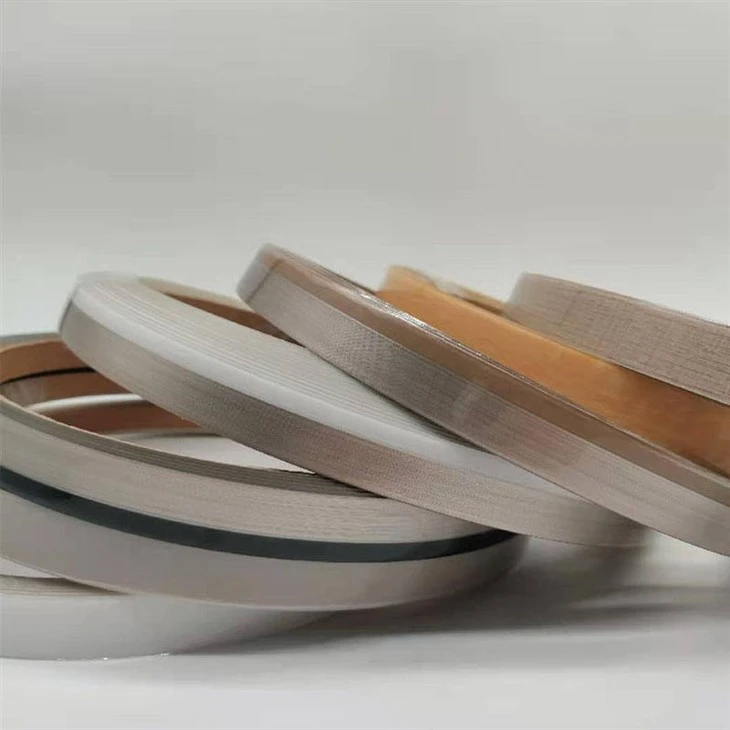
The first step in preventing discoloration is to choose high-quality acrylic edge banding. At our company, we offer a wide range of Acrylic Edge Banding Wood Grain High Gloss, Acrylic Edge Banding Tape Solid Glossy, and Acrylic Edge Banding Tape Solid Matt products that are made from premium materials and are designed to resist discoloration. Our edge banding is formulated with UV stabilizers and other additives to protect it from the harmful effects of sunlight and other environmental factors.
2. Protect from UV Exposure
To minimize the impact of UV rays, it's important to protect your acrylic edge banding from direct sunlight. You can do this by using window treatments, such as blinds or curtains, to block the sun's rays. If the edge banding is used in an outdoor application, consider using a UV-resistant coating or film to provide an additional layer of protection.
3. Avoid Chemical Exposure
When cleaning or maintaining your acrylic edge banding, it's important to use mild, non-abrasive cleaners that are specifically formulated for acrylic materials. Avoid using harsh chemicals, such as bleach, ammonia, or solvents, as these can damage the acrylic surface and cause discoloration. Instead, use a soft, damp cloth and a gentle cleaner to wipe down the edge banding regularly.

4. Control Temperature and Humidity
Maintaining a stable temperature and humidity level in the environment where the acrylic edge banding is installed is crucial for preventing discoloration. Keep the temperature between 60°F and 80°F (15°C and 27°C) and the humidity level between 30% and 50%. You can use a dehumidifier or a humidifier to adjust the humidity level as needed.
5. Proper Installation
Proper installation is essential for preventing discoloration. Make sure to follow the manufacturer's instructions carefully when installing the edge banding. Use a high-quality adhesive and ensure that the banding is properly bonded to the substrate. Avoid leaving gaps or air bubbles between the banding and the surface, as these can trap moisture and dirt, leading to discoloration over time.
6. Regular Maintenance
Regular maintenance is key to keeping your acrylic edge banding looking its best. Clean the edge banding regularly with a soft, damp cloth and a gentle cleaner to remove dirt, dust, and debris. Inspect the edge banding periodically for any signs of damage or discoloration. If you notice any issues, address them promptly to prevent further damage.
Conclusion
Discoloration of acrylic edge banding can be a frustrating problem, but it can be prevented with the right strategies and care. By choosing high-quality products, protecting the edge banding from UV exposure, avoiding chemical exposure, controlling temperature and humidity, installing the banding properly, and performing regular maintenance, you can ensure that your acrylic edge banding retains its beautiful appearance for years to come.
If you have any questions or need further information about our acrylic edge banding products or how to prevent discoloration, please feel free to contact us. We are always here to help you find the best solutions for your project.
References
- "Acrylic Edge Banding: Properties and Applications." Journal of Materials Science and Engineering, vol. 10, no. 2, 2023, pp. 45-52.
- "Preventing Discoloration in Acrylic Products." Plastics Technology, vol. 69, no. 3, 2022, pp. 32-37.
- "The Effects of UV Radiation on Acrylic Materials." International Journal of Polymer Science, vol. 2021, Article ID 654321, 10 pages, 2021.


