


When it comes to woodworking and furniture manufacturing, edge banding plays a crucial role in enhancing the aesthetics and durability of the finished products. Among the various types of edge banding materials available in the market, ABS (Acrylonitrile Butadiene Styrene) edge banding has gained significant popularity due to its versatility, durability, and aesthetic appeal. As an ABS edge banding supplier, I often get asked whether ABS edge banding is easy to replace. In this blog post, I'll delve into this question, exploring the factors that influence the ease of replacement and offering insights based on my experience in the industry.
Understanding ABS Edge Banding
Before we discuss the replacement process, it's essential to understand what ABS edge banding is and why it's a popular choice. ABS is a thermoplastic polymer known for its strength, impact resistance, and chemical stability. These properties make ABS edge banding an ideal material for protecting the edges of furniture, cabinets, and other wood products from damage, moisture, and wear.
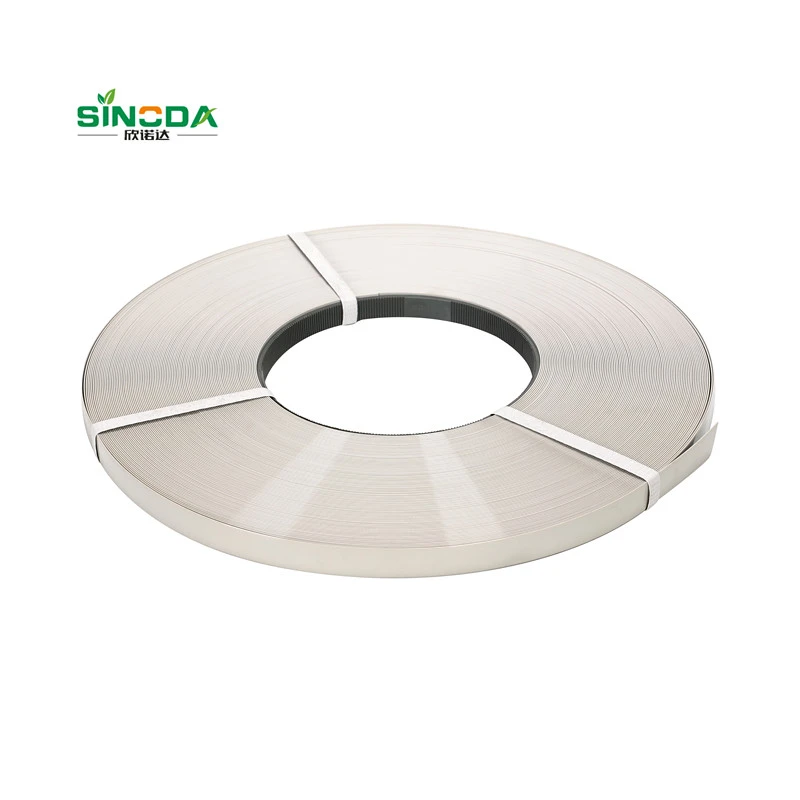
ABS edge banding comes in a variety of colors, finishes, and patterns, including wood grain, solid high gloss, and solid matt. For instance, our ABS Edge Banding Tape Wood Grain High Gloss provides a realistic wood appearance with a shiny finish, while the ABS Edge Banding Tape Solid High Gloss offers a sleek and modern look. The ABS Edge Banding Tape Solid Matt gives a more subdued and elegant finish. This wide range of options allows manufacturers to match the edge banding to the overall design and style of their products.
Factors Affecting the Ease of Replacement
Several factors influence how easy it is to replace ABS edge banding. Let's take a closer look at these factors:
1. Adhesive Type
The type of adhesive used to attach the ABS edge banding to the substrate is one of the most critical factors. There are two main types of adhesives commonly used: hot melt adhesives and PUR (Polyurethane Reactive) adhesives.
Hot melt adhesives are relatively easy to work with and are suitable for many applications. They can be softened with heat, which means that if you need to replace the edge banding, you can use a heat gun to warm up the adhesive and carefully peel off the old banding. However, hot melt adhesives may not provide the same level of durability as PUR adhesives, especially in high - humidity environments.
PUR adhesives, on the other hand, form a strong and permanent bond with the substrate. While this makes the edge banding more resistant to peeling and damage, it also makes replacement more challenging. Removing edge banding attached with PUR adhesive often requires more force and may involve using special tools to cut through the adhesive.
2. Edge Banding Thickness
The thickness of the ABS edge banding can also affect the replacement process. Thicker edge banding is generally more durable but may be more difficult to remove. Thinner edge banding is easier to peel off, but it may not provide the same level of protection or aesthetic appeal as thicker options. When choosing edge banding, it's important to consider the balance between durability and ease of replacement based on the specific application.
3. Substrate Condition
The condition of the substrate to which the edge banding is attached is another important factor. If the substrate is in good condition, replacement is likely to be easier. However, if the substrate has been damaged, such as by moisture or physical impact, it may be more difficult to remove the old edge banding without causing further damage to the substrate. In some cases, it may be necessary to repair the substrate before replacing the edge banding.
4. Tools and Skills
The availability of the right tools and the skills of the person performing the replacement also play a significant role. For simple replacements, basic tools such as a heat gun, a putty knife, and a utility knife may be sufficient. However, for more complex jobs, specialized tools like edge banding removers or routers may be required. Additionally, having experience in edge banding replacement can make the process much smoother and more efficient.
The Replacement Process
Assuming that the edge banding was attached with a hot melt adhesive, here is a general process for replacing ABS edge banding:
Step 1: Prepare the Tools
Gather the necessary tools, including a heat gun, a putty knife, a utility knife, and a new piece of ABS edge banding. Make sure the heat gun is set to a low - to - medium heat setting to avoid damaging the substrate.
Step 2: Heat the Adhesive
Hold the heat gun about 2 - 3 inches away from the edge banding and move it back and forth along the length of the banding. As the adhesive softens, you should be able to feel the edge banding starting to loosen.
Step 3: Remove the Old Edge Banding
Once the adhesive is soft, use the putty knife to gently lift the edge of the old edge banding. Slowly peel the banding away from the substrate, applying more heat as needed to keep the adhesive soft. If there are any stubborn areas, use the utility knife to carefully cut through the adhesive.

Step 4: Clean the Substrate
After removing the old edge banding, clean the substrate surface to remove any remaining adhesive residue. You can use a solvent or a specialized adhesive remover for this purpose. Make sure the substrate is completely dry before applying the new edge banding.
Step 5: Apply the New Edge Banding
Apply a new layer of hot melt adhesive to the substrate using a hot melt glue gun. Carefully align the new ABS edge banding with the edge of the substrate and press it firmly into place. Use a roller or a flat tool to ensure a good bond. Trim any excess edge banding using a utility knife.
Conclusion
In conclusion, whether ABS edge banding is easy to replace depends on several factors, including the type of adhesive used, the thickness of the edge banding, the condition of the substrate, and the availability of tools and skills. In general, if the edge banding was attached with a hot melt adhesive and the substrate is in good condition, replacement can be a relatively straightforward process. However, if PUR adhesive was used or the substrate is damaged, replacement may be more challenging.
As an ABS edge banding supplier, we understand the importance of providing high - quality products that meet the diverse needs of our customers. Whether you're looking for a durable edge banding solution or one that's easy to replace, we have a wide range of options to choose from. If you're interested in learning more about our ABS edge banding products or have any questions about the replacement process, we encourage you to contact us for a detailed discussion. We're here to help you make the best choice for your woodworking and furniture manufacturing projects.
References
- "Edge Banding Technology Handbook" by industry experts in woodworking.
- Manufacturer's guidelines for ABS edge banding and adhesives.


